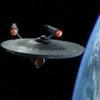
This thread wound up inspiring me to update the Star Fleet Universe wiki, which is what I have been doing for the last week. If anyone who may of read this thread were interested in learning more, I am copying the teaser I am posting to a few game dev forums in the hope of drawing attention too it. I will now permanently return to talking only about Star Control in these forums, but just thought some who had read this thread might be interested in the complete discussion of some o
Kavik_Kang
Within SFB there is a concept of "high warp". Combat in SFB is said to occur at warp speeds of 3.2 or below. Anything faster than that is called "high warp" a speed too great for weapons to be used. This same concept could be applied to the quasi and hyperspace transit maps. Select destination by auto pilot, travel a short distance where the proximity of mass (planet, moon, ship, etc) will prevent entering high warp, enter high warp after being able to travel normally
2D and 3D space ship games are entirely different things. Some aspects are relevant to both, for example The Kaufman Retrograde, Oblique Attack, Oblique Option Point, Sabre Dance... most of the same "laws" still apply. The main difference is in your level of situational awareness. In a 3D game you are viewing the world through a straw, it is more immersive. In 2D you are viewing the world through gods eyes, and in pure top down 2D you also gain the effect of Pattern Re
From what I have read here they seem to be planning something along those lines, a way to keep playing the game past the storyline that will still be interesting in some way. Some of these ideas in the last few posts seem more appropriate for that phase of the game than during the storyline phase of the game. Assuming my understanding about what little what they said about that is at least in the ballpark.
I think everyone noticed that the Quasispace map had no relation to the Hyperspace map, and like you and most others I would guess, thought that it should. And I agree with you that it should in the new game, it is just a lot easier for everyone to understand that way. The way the Quasispace map worked in SCII actually inspired me to come up with my own personal new term within game design many years ago. There is a thing computer game devs call "programmer art" which is t
If you look at my map design thread, you mostly seem to be saying mostly the same thing as I was there about there being, in my example anyway, 4 layers of maps 2 of which have a second "navigational" variant. So the structure looks something like this... Quasispace transit map & Quasispace navigational map Hyperspace transit map & Hyperspace navigational map Solar System transit map Planet transit map What you appear to be
How great of an effect does Quasispace have? I would think the more it shortens the trip the bigger the map can be without players being overwhelmed. Quasispace can be thought of as a magnifying glass in this regard.
Ok... One VERY last thing for this thread (honest this time). Before I began referring too him as the Rodney Dangerfield of the gaming world I used to have another description of SVC. If you are wanting to know what the story of the SFU is like, the tone, the atmosphere... everything like that, it is very easy to describe. SVC is the Tom Clancy of the gaming world. Just imagine that Gene Roddenberry never existed and that Tom Clancy wrote Star Trek... and y
I've probably talked enough about SFB that isn't related to Star Control at this point, so I'll end this thread with one last thing. If any of this has made you interested in understanding more about the game, I suggest watching this video. There are a actually a lot of You Tube videos on SFB, many of them by people who barely understand the game. To wade through all that for you, watch this one. There have always been many ways for SFB players to have thei
Ok... I was wondering if today's generation of gamers, raised on graphical powerhouse type games would, as I have seen trained professional artists do before, look at it for a few minutes, deconstruct it in their minds, and give the right answer in under 10 minutes. Apparently it takes the training and ability to construct it yourself to deconstruct it in your minds like that, just seeing it since you were a small child isn't enough. Anyway... The way I was
Here's a hint about the F&E cover art that isn't likely to help you see what is actually there, but will probably make you chuckle once you do know... "Nefarious activities & shennanigans..."
...and I'll also throw in a well-known incident from the past that most SFB players are aware of that serves as an excellent example of how complete of a game SFB actually is. And a little about where you've heard about SFB before without realizing it. Back when Star Trek III: The Search for Spock was released a lot of SFB players noticed everything that happened in the movie was already represented in the game. Even the ending. At the end of the movie Kirk t
While we wait to see if anyone can see what is hidden within the F&E cover art, I figured I'd throw out something else that might be of interest to aspiring game designers... The most recent heavily SFB-inspired game is Faster Than Light. I thought I would explain exactly what it is about Faster Than Light that makes it such a popular game. The design of Faster Than Light is actually sheer-genius, and is almost certainly not fully appreciated. Star Fleet Batt
If you look more closely at the Federation ship you'll see a 3rd warp nacelle in the middle. It's not a Heavy Cruiser (Enterprise), it is a Dreadnaught. A fleet command ship. F&E is a strategic level game so command ships are shown. That's not what you are looking for though, there is something very interesting about this art that I would bet the artists at Stardock, if they are reading this, have already noticed. It's a lot harder for the unt
...and speaking of Federation & Empire, here is the cover art. This is a very interesting bit of game trivia... does anyone notice anything unusual about this image? Anything at all? [Don't answer if you are an SFB player, most of whom know this.]
Oh yeah, one last thing about Master of Orion. There is no mystery as to why it is so totally awesome and clearly one of the best computer games ever made. In reality Master of Orion is a collaboration between Sid Meier (Civilization) and Steven V Cole (Star Fleet Battles, Federation & Empire). The greatest computer game designer of all time, and the greatest board game designer of all time. How can it be so great... How could it possibly not have been? Tha
[quote who="Volusianus" reply="17" id="3631245"] I don't think you understand the scope I'm going for. The scope I'm referring to is so absurd literally noone would ever in their right mind ever actually try to make it and succeed. Right down to what underwear my goddamn officers are wearing [e digicons]:P[/e] (that is, of course, out of millions of individuals). Superfluous? Of course. Satisfying? Immensely. [/quote] There are some very old ideas for game
...and, I just can't resist, sometimes pride just gets the better of you. As I mentioned earlier, Steven V Cole is the "father of modern game design" and practically created the process by which games are made today. You've never heard of him before, because both he and his game are the Rodney Dangerfield of the gaming world. "They don't get no respect." Star Fleet Battles is the second most influential game in the history of games second only to Dungeons
How "big" were The Big Three? I've realized that modern gamers have no concept of this and would be very surprised. You young whippersnappers (I've always wanted a reason to say that!) know of the concept of an "expansion" for a game, and probably assume that these old games "had a few expansions". These are rough guesses, but probably pretty close... If you had everything for Advanced Squad Leader you would have about 1,000 pages of total material coming fro
I should also point out that three primary genres of computer games trace their heritage back to "The Big Three". All RTS games can trace their line back to Advanced Squad Leader. All "energy allocation" games, "system display" games, and most space ship games, can trace their lineage back to Star Fleet Battles. And, of course, all RPGs can trace their lineage back to Dungeons & Dragons. As an example, I've mentioned here before that I don't like space sh
Fortress America is certainly another one that has passed Sid's test well, but it has a single significant flaw that makes it a harder game to recommend. There was an old adage among board game designers "you won't be there to answer questions when the player opens the box and tries to learn the game, everything they need to do that themselves has to be in the box." Fortress America breaks this rule, everything needed to learn it and have a good game to play is not in the
Something Volusianus said in another thread reminded me that, of course, there would be more than a few aspiring game designers in a thing like this founders program. Since we are in between updates I thought I'd provide something interesting to read until there is more Star Control to talk about. So here is some more game history, this time the *real* reason that the old "hobbiest" board game industry died from the perspective of someone who was working in it when it happened
An interesting example too me since I consider Faster Than Light to be the most SFB-like computer game ever made, even more so than Master of Orion or Star Fleet Command. Yes, the mothership is "the upgradable character" in Star Control, but at the same time you are being represented as the star character in the story of an adventure game. Thst is a minor RPG element. I think this is a case of Star Control showing how uniquely awesome it is by being impossible to categoriz
When I first joined the SFB Staff I was very intimidated by some of it's members. It took me a little while to realize that, for example, just because a guy is a 2-star General is no reason not to give my opinion right alongside of his. The circumstances of my life have resulted in my possessing an abnormal level of knowledge of "all things space ship". That is no reason not to give your opinion right alongside of mine. Your opinion is every bit as valid as mine.
Savage, I personally define an RPG as a game where the focus is ultimately on your character. Going up levels, gaining new skills, getting better equipment, etc. An adventure game, in my mind, is a game that is about the story, and your character never really changes. Volusianus, I would actually upgrade the systems before the "inherent" characteristics of the ships. Personally, as I said in the previous post, I would consider the late game ships to be the upgrades o